AuditBuddy
AI-powered internal audit platform
The Problem
Internal audit is stuck in spreadsheets. Auditors spend 80% of their time on data prep - chasing exports, cleaning files, running VLOOKUPs - and only 20% on actual analysis. Worse, they're forced to sample: testing 50 transactions out of 5,000 and hoping the fraud isn't in the 4,950 they didn't check. We interviewed 12 people across two tracks - 7 decision-makers (CFOs, controllers, heads of IA) and 5 practicing auditors. The executives told us they valued coverage and evidence over AI novelty. The auditors told us something more specific: the single biggest time sink was 3-way matching - reconciling purchase orders, goods receipts, and invoices manually. That's where we started.
Key Decisions
- ▸Scoped to one workflow, not a platform. The temptation was to build a full audit management system. Instead, we focused on producing one deliverable: a defensible 3-way match exception list. We even built a custom success metric for this - TtFDEL (Time-to-First Defensible Exception List) - measuring how fast a user goes from uploading files to having an exportable, interview-ready result.
- ▸Evidence first, dashboards second. Our research showed auditors need traceable exception records they can take into stakeholder interviews - not just charts. So we built the export and the evidence tables first. The dashboard came later, after users who saw the raw exception list asked for visual summaries. We shipped the dashboard based on that feedback, not our assumption.
- ▸Strict file validation before analysis. We deliberately block exception generation if the uploaded CSVs don't pass schema validation. This was a tradeoff - it adds friction upfront - but audit outputs lose credibility when generated from malformed data. Defensibility mattered more than convenience.
What I Shipped
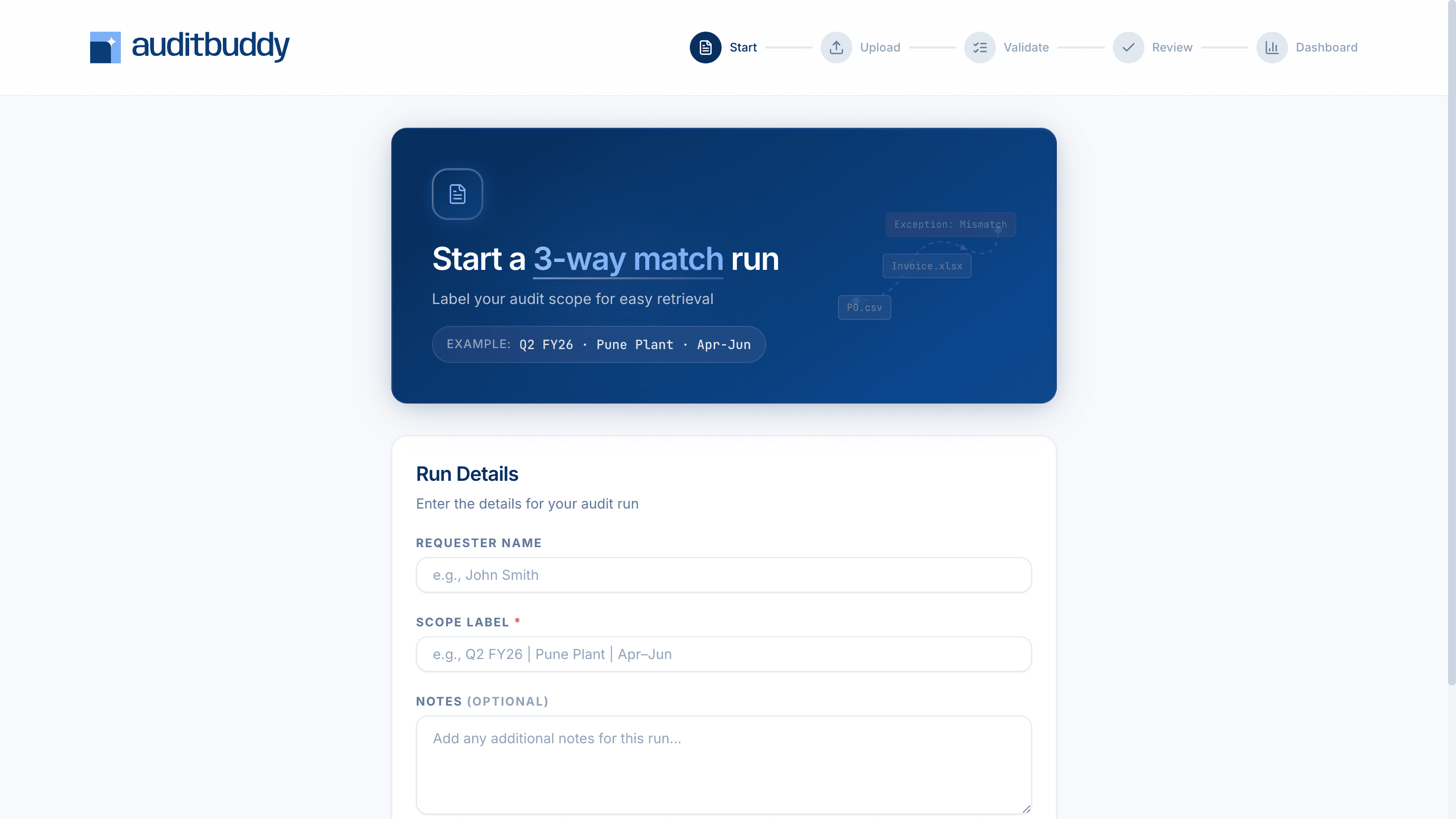
- ▸A full-stack web application with a 5-step guided workflow: create an audit run, upload PO/GRN/Invoice CSVs, validate schemas, generate exceptions, and review results in a dashboard with KPI summaries, evidence tables, and variance breakdowns. The MVP flags missing PO references, amount mismatches (>10% tolerance), quantity variances (>2%), and sequencing violations like invoices dated before the purchase order.
- ▸Outputs include Excel export (detailed exception list) and PDF export (presentation-ready summary). The thresholds are fixed today - a deliberate tradeoff for predictability over configurability at MVP stage.
- ▸Live at mvp.auditbuddy.ai
Results
- ▸Won "High Potential Product" at Masters' Union MVP Demo Day - selected from 101 teams. Landed 3 pilot conversations through continuous feedback loops and demos: an e-commerce company (procurement analytics), a VC firm (compliance dashboards for 20 portfolio companies), and a ₹500 Cr telecom company (contract leakage and operational visibility). The telecom engagement has moved to active POC; the other two are in discussion.
Reflection
Starting narrow was the right call. A working exception list in someone's hands in 2 weeks taught us more than 6 months of building a full platform would have. The dashboard wasn't in the original plan - users asked for it after seeing the raw output. That sequence matters: ship the core value first, then let feedback tell you what to wrap around it.